Key Features:
One-component thermal grease: high thermal conductivity, low modulus and mechanical stress,
easy to apply and remove with alcohol or acetone, high temperature resistance
Product Name :
NOBELPLA 85189Color :
Grey pasteNote :
CustomizableSpecific Gravity :
3.0Oil Scatteration [%] :
≤1.0Typical Bond Line Thickness [μm] :
35Thermal Conductivity [W/(m-K)] :
3.0
| Item | Specification / Description |
|---|---|
| Product Name | NOBELPLA85189 |
| Product Type | One-Component Thermal Grease |
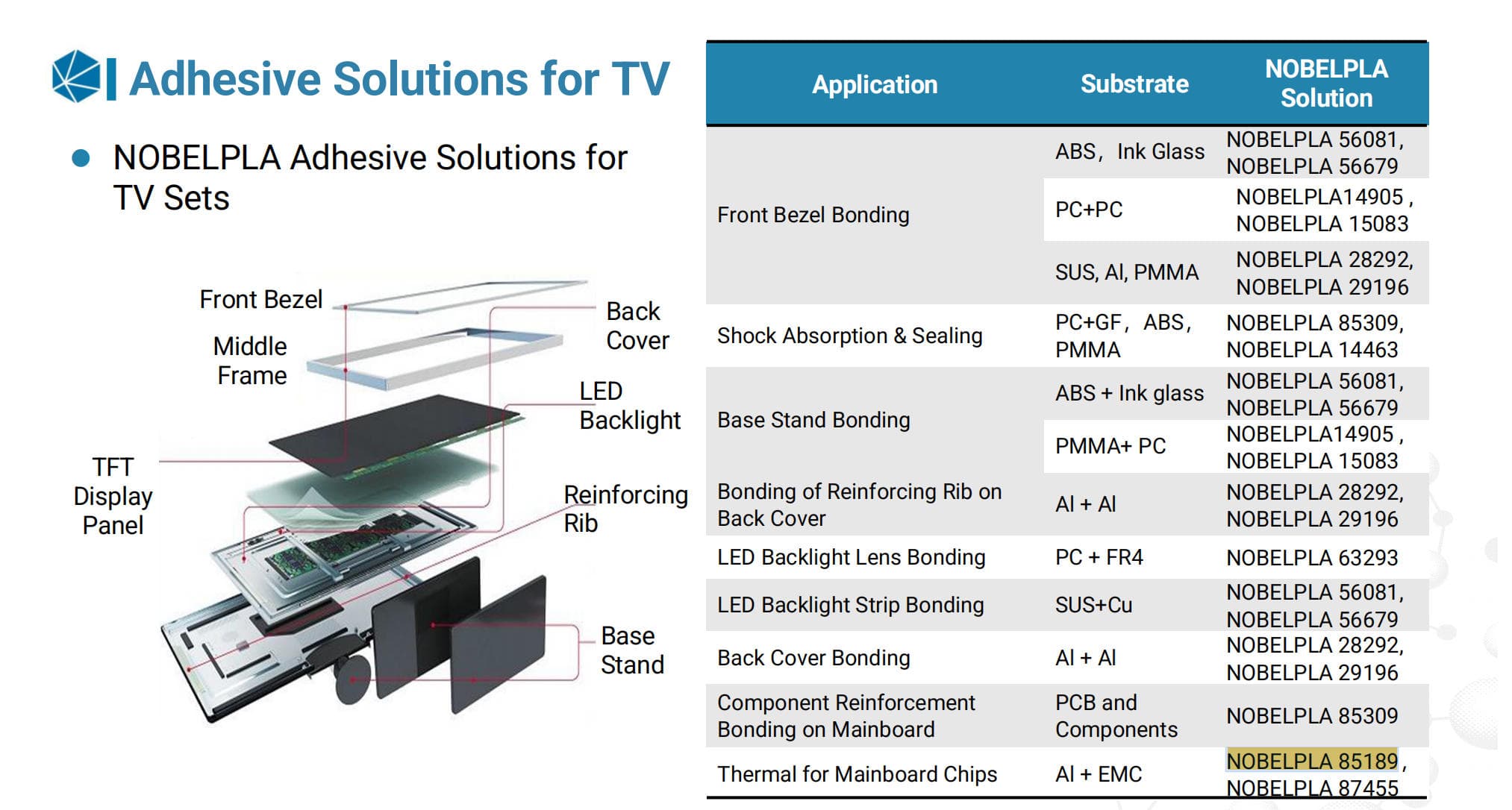
| Target Application | Thermal management for TV mainboard chips, Al + EMC assemblies |
| Chemistry | Silicone-based |
| Curing Mechanism | Non-curing, ready-to-use thermal interface material |
| Color | Grey paste |
| Specific Gravity | 3.0 |
| Thermal Conductivity | 3.0 W/(m·K) |
| Bond Line Thickness (BLT) | 35 μm (typical) |
| Oil Scatteration | ≤1.0% |
| Primary Function | Thermally conductive interface; heat dissipation |
| Mechanical Properties | Low modulus to minimize mechanical stress on components |
| Processability | Easy to apply and remove using alcohol or acetone |
| Customization | Formulation customizable for specific thermal performance requirements |
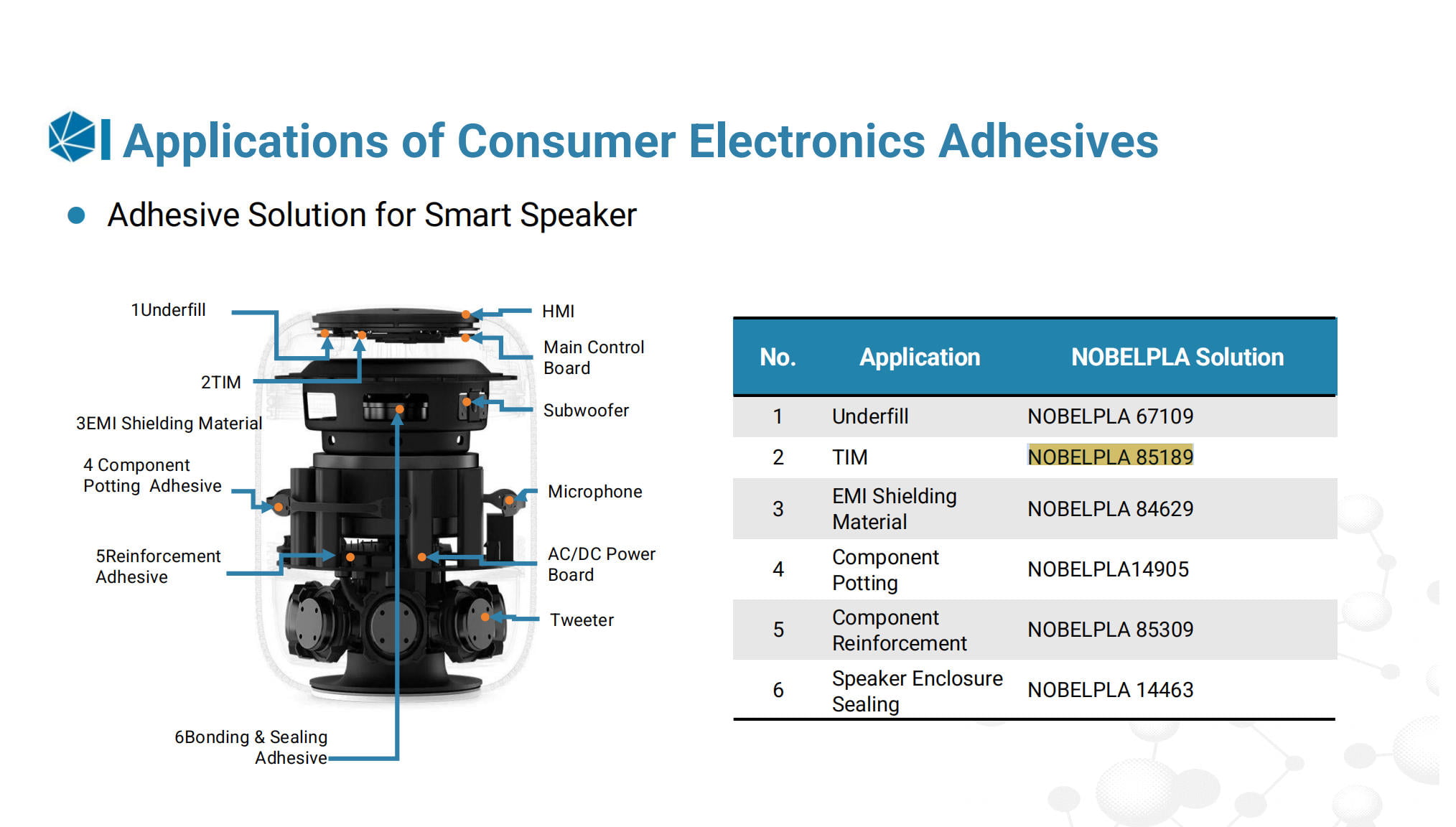
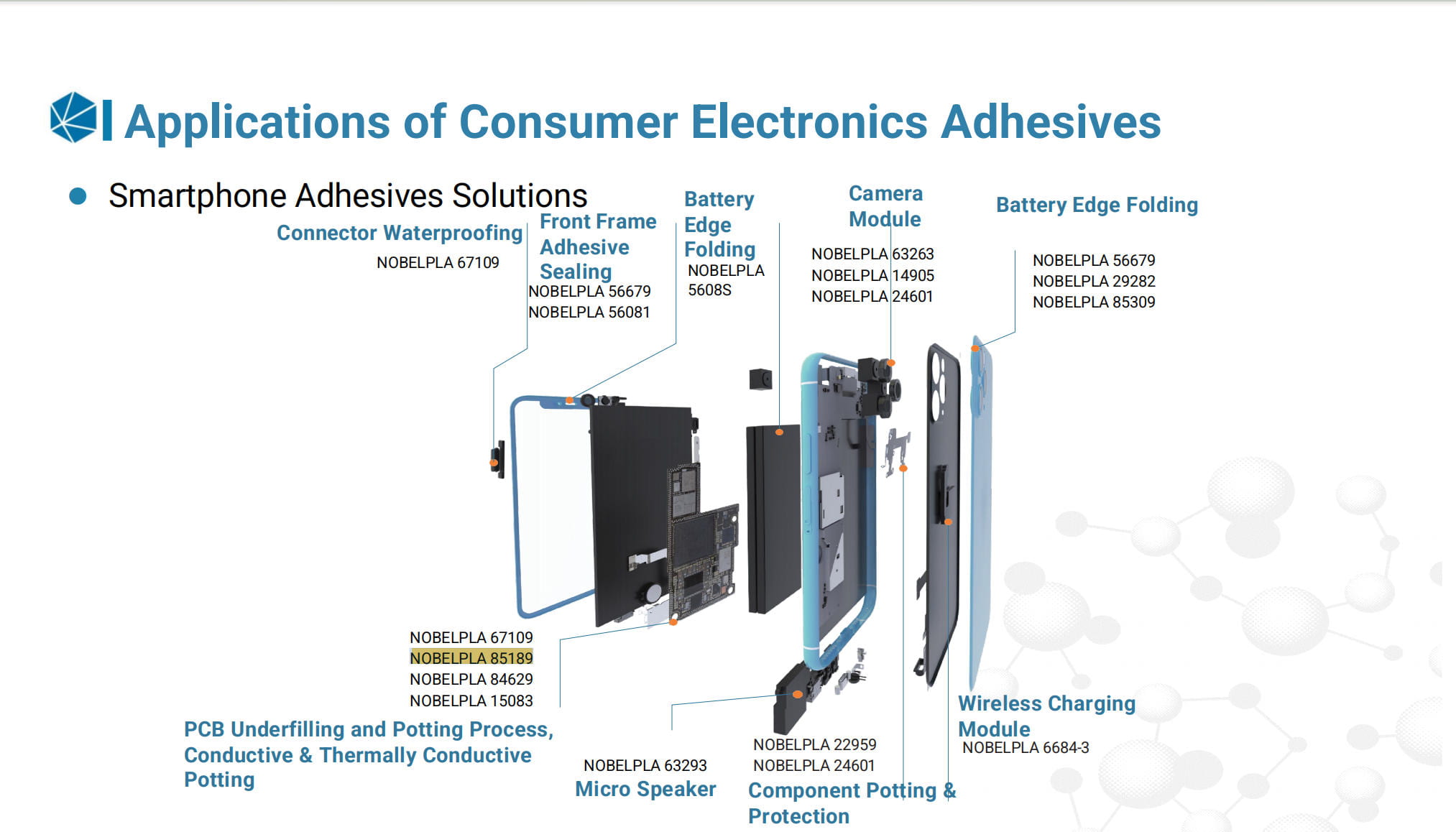
NOBELPLA85189 is a high-performance, one-component silicone-based thermal grease designed for efficient heat dissipation in TV mainboard chips and Al + EMC assemblies. The material provides high thermal conductivity (3.0 W/m·K) while maintaining a low modulus to reduce mechanical stress on delicate components.
With a typical bond line thickness of 35 μm and minimal oil scatteration (≤1.0%), NOBELPLA85189 ensures precise and clean application. Its non-curing, ready-to-use formulation allows easy application and removal with common solvents such as alcohol or acetone, supporting flexible assembly and maintenance processes.
Customizable formulations allow optimization for specific thermal management requirements, making NOBELPLA85189 a reliable and practical solution for advanced electronic thermal interface applications.
We specialize in thermally conductive interface materials (TIMs), structural bonding adhesives, encapsulants, potting compounds, conformal coatings, UV-curable systems, and electrically conductive adhesives for electronic assemblies.
Our products serve PCB assembly, power electronics, automotive electronics, LED modules, battery management systems (BMS), industrial automation, and semiconductor-related applications.
Our formulations are based on epoxy, silicone (RTV and addition-cure), polyurethane, acrylic, UV-curable, and hybrid polymer systems optimized for long-term reliability.
A TIM reduces interfacial thermal resistance between heat-generating devices and heat-dissipating components, thereby improving heat transfer efficiency and system stability.
Yes. Most thermal materials are engineered to combine high thermal conductivity with excellent dielectric strength and electrical insulation properties.
Thermal conductivity varies depending on filler technology and formulation design. Multiple grades are available to meet different power density and heat flux requirements.
Yes. Our gap fillers feature controlled rheology to accommodate surface irregularities while maintaining consistent thermal performance.
Yes. We supply silver-filled conductive adhesives suitable for EMI shielding, grounding, and selective electrical interconnection.
Our materials support heat curing, room-temperature curing, moisture curing, UV curing, and dual-cure systems to match diverse manufacturing processes.
Yes. Formulations are optimized for precision dispensing, jetting equipment, screen printing, and robotic assembly lines.
Yes. Low-viscosity materials improve capillary flow, wetting performance, and void reduction in compact electronic assemblies.
Yes. High-thixotropy systems are available for vertical bonding and controlled material placement.
Depending on chemistry, our materials are engineered to operate reliably under both standard and elevated thermal conditions.
Yes. Many formulations maintain mechanical strength and electrical performance under repeated thermal cycling environments.
Yes. Flexible silicone and hybrid systems help mitigate thermo-mechanical stress caused by coefficient of thermal expansion (CTE) mismatch.
CTE (Coefficient of Thermal Expansion) control minimizes stress during temperature fluctuations, reducing the risk of delamination, cracking, and long-term reliability failures.
Yes. Our encapsulants protect electronic components from moisture ingress, vibration, dust contamination, and chemical exposure.
Yes. Selected formulations are designed to meet flame-retardant requirements for safety-critical electronic systems.
Yes. Conformal coatings are available to protect PCBs against humidity, corrosion, and environmental stress.
Key parameters include thermal conductivity, dielectric strength, volume resistivity, glass transition temperature (Tg), CTE, modulus, viscosity profile, and long-term aging stability.
Yes. Our materials comply with major international regulations such as RoHS and REACH.
Yes. Full batch traceability ensures consistent quality control and production reproducibility.
Yes. We provide application-driven customization based on required thermal, electrical, mechanical, and processing characteristics.
Within technical feasibility, viscosity, working time, pot life, and curing speed can be adjusted to enhance manufacturing efficiency.
Yes. Our technical team supports sample evaluation, pilot production trials, and reliability qualification processes.
Yes. Our products are engineered to withstand vibration, humidity, and harsh thermal environments typical in automotive systems.
Yes. Our thermal management materials are designed to reduce interfacial thermal resistance and improve heat dissipation efficiency.
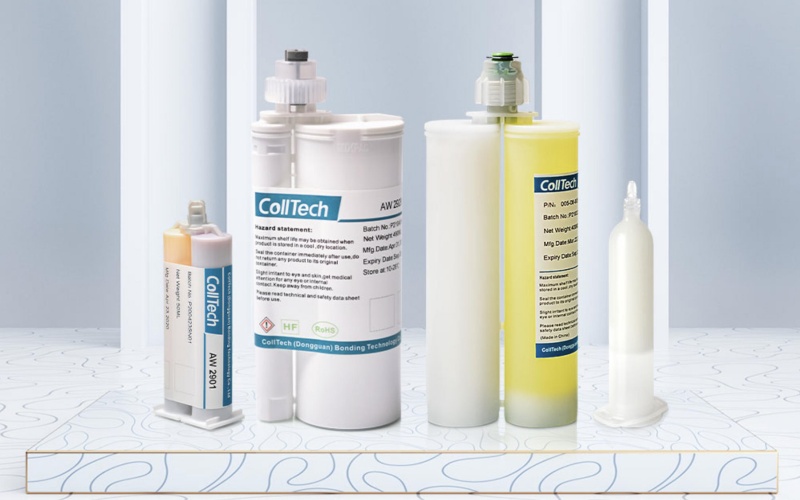
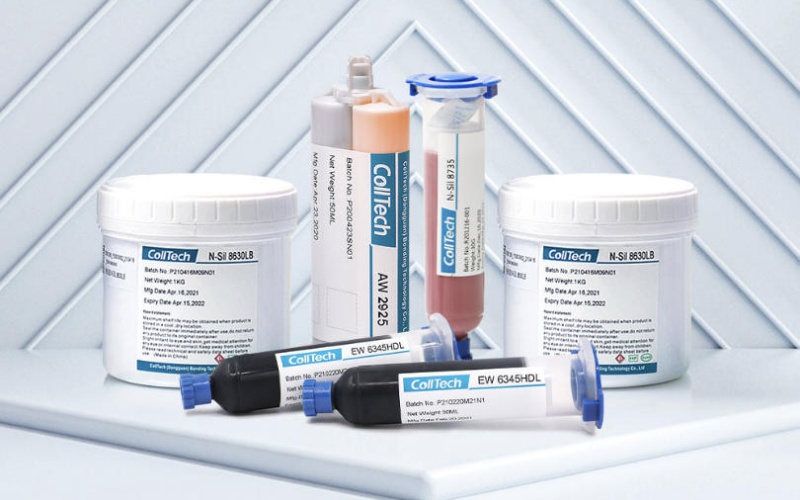
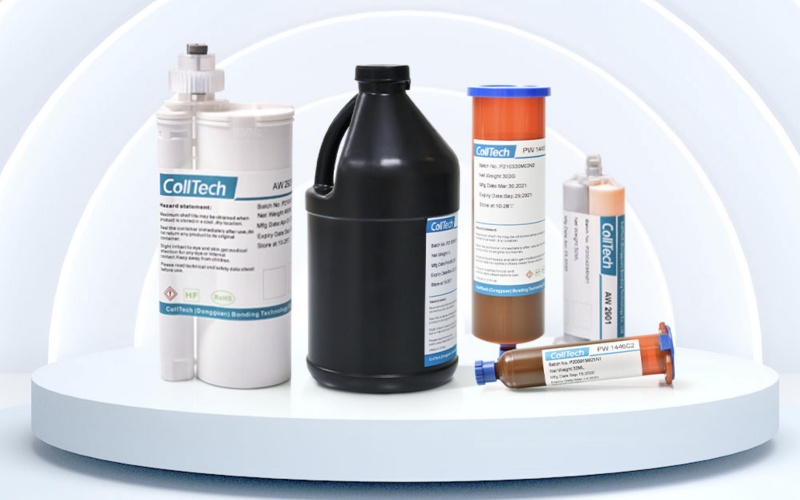
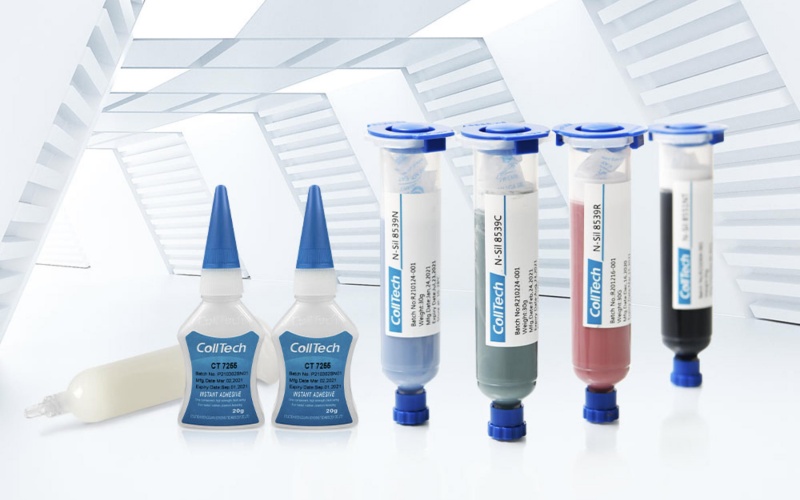
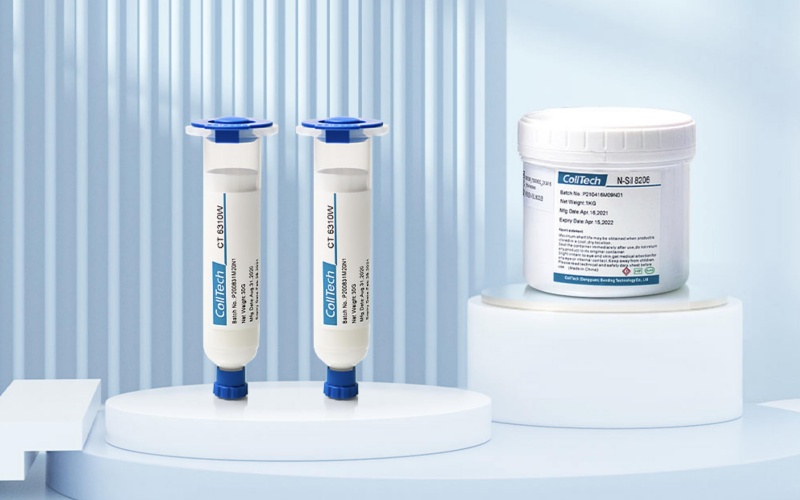
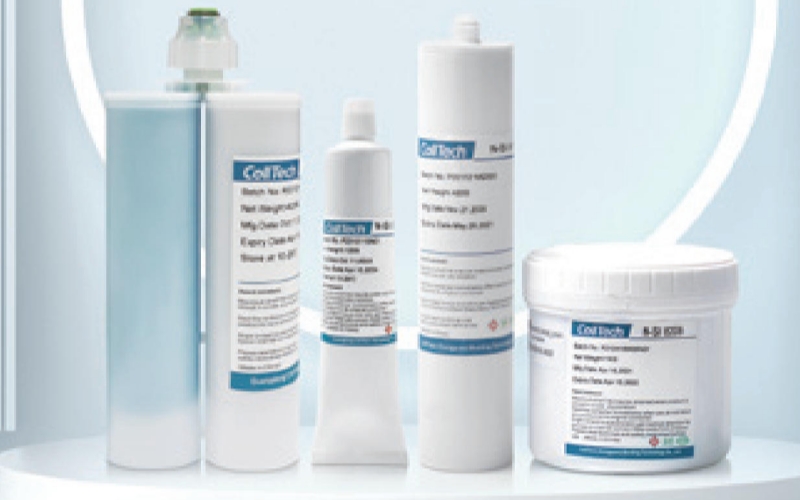
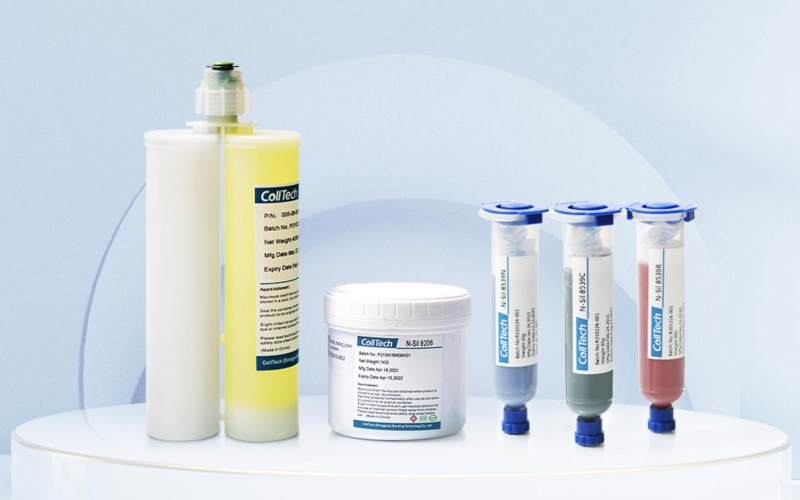
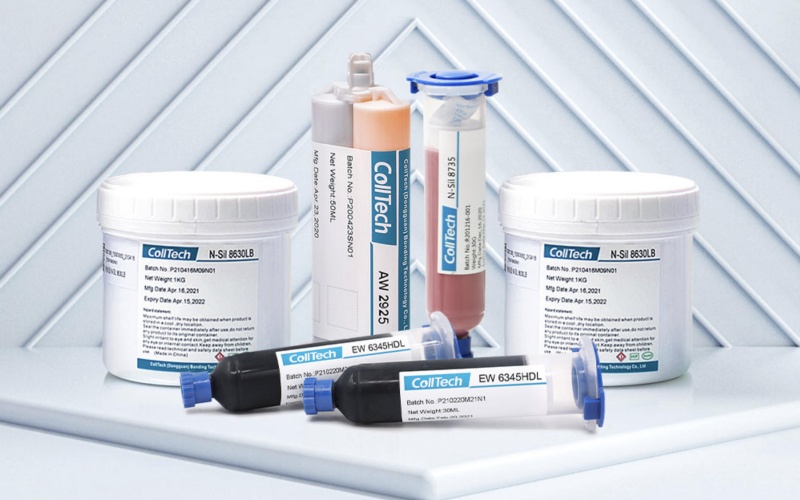
Products are supplied in syringes, cartridges, pails, and drums to support laboratory testing and high-volume manufacturing.
Shelf life depends on formulation and storage conditions. Detailed guidance is provided in each Technical Data Sheet (TDS).
Customers may contact our sales and engineering teams through the official website to request samples, quotations, and application support.
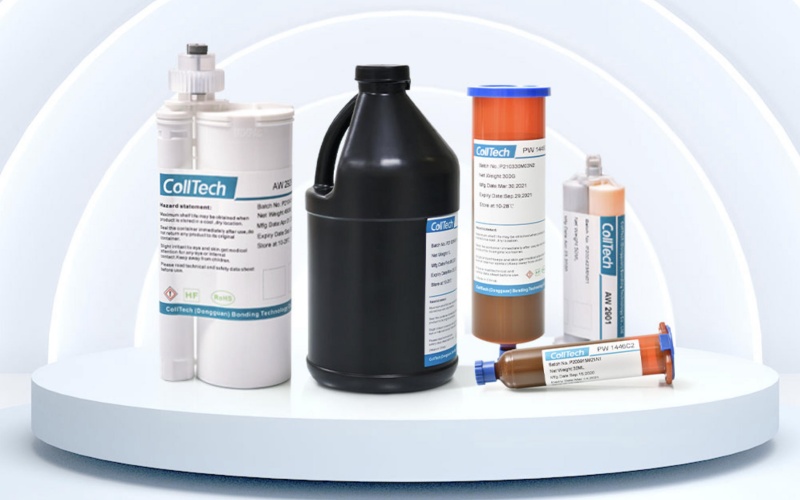
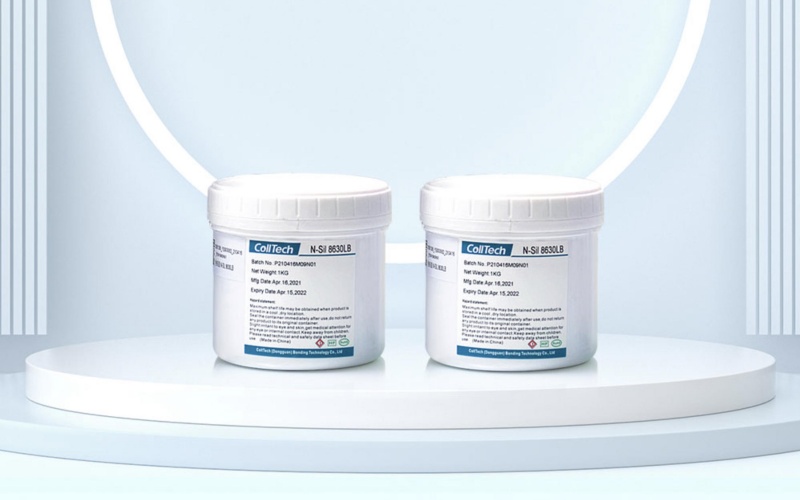
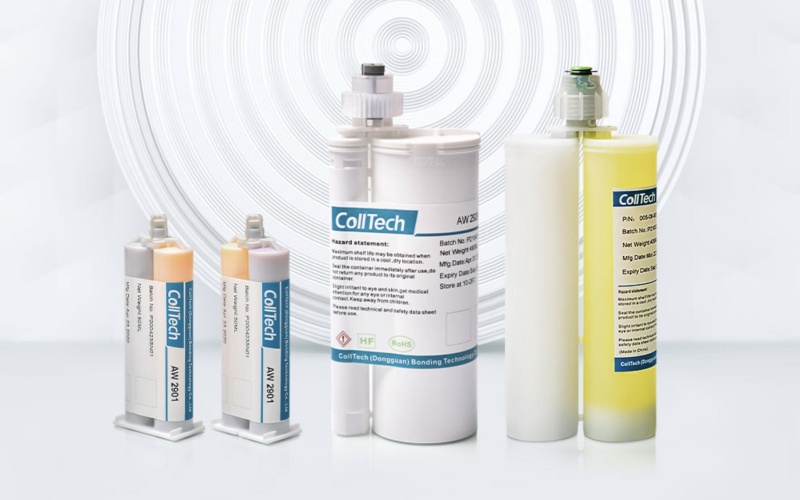
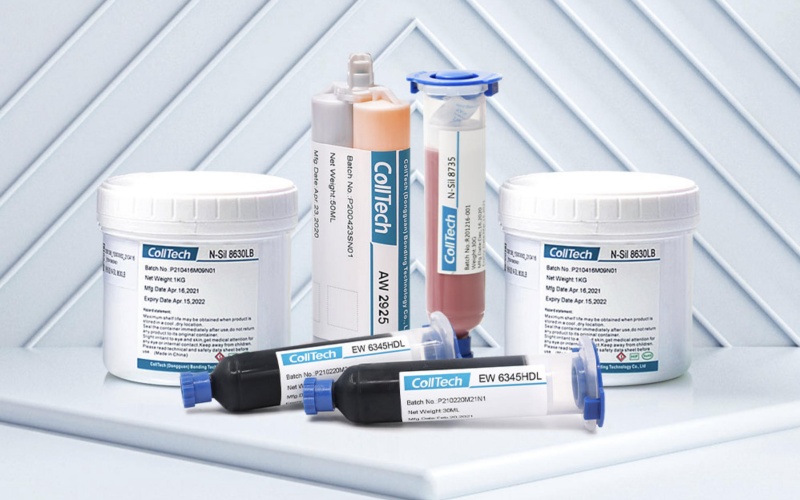
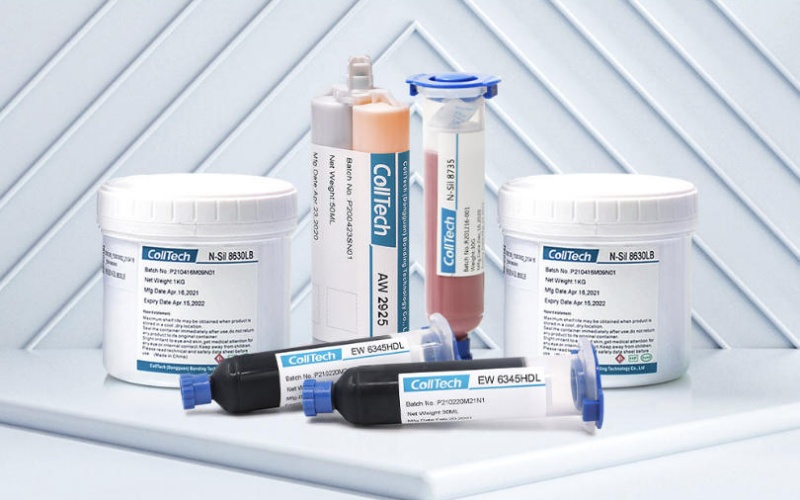

One-stop Electronic Adhesive solution provider.

Support email contact.

Professional technical guidance.

Support email contact.
leave a message
Scan to wechat :

Scan to Whatsapp :

 Product categories