Key Features:
Two-component epoxy for bonding or reinforcing electronic components,
excellent adhesion to a variety of substrates, high thixotropy,
long operating time, easy to apply in a variety of ways
Product Name :
NOBELPLA51031Color :
Black / Light yellowViscosity [mPa.s] :
41000Mixture Ratio :
2:1Hardness :
95DLap Shear Strength [MPa] :
25 (Al to Al)Note :
Customizable
| Item | Specification / Description |
|---|---|
| Product Name | NOBELPLA51031 |
| Product Type | Two-Component Epoxy Adhesive |
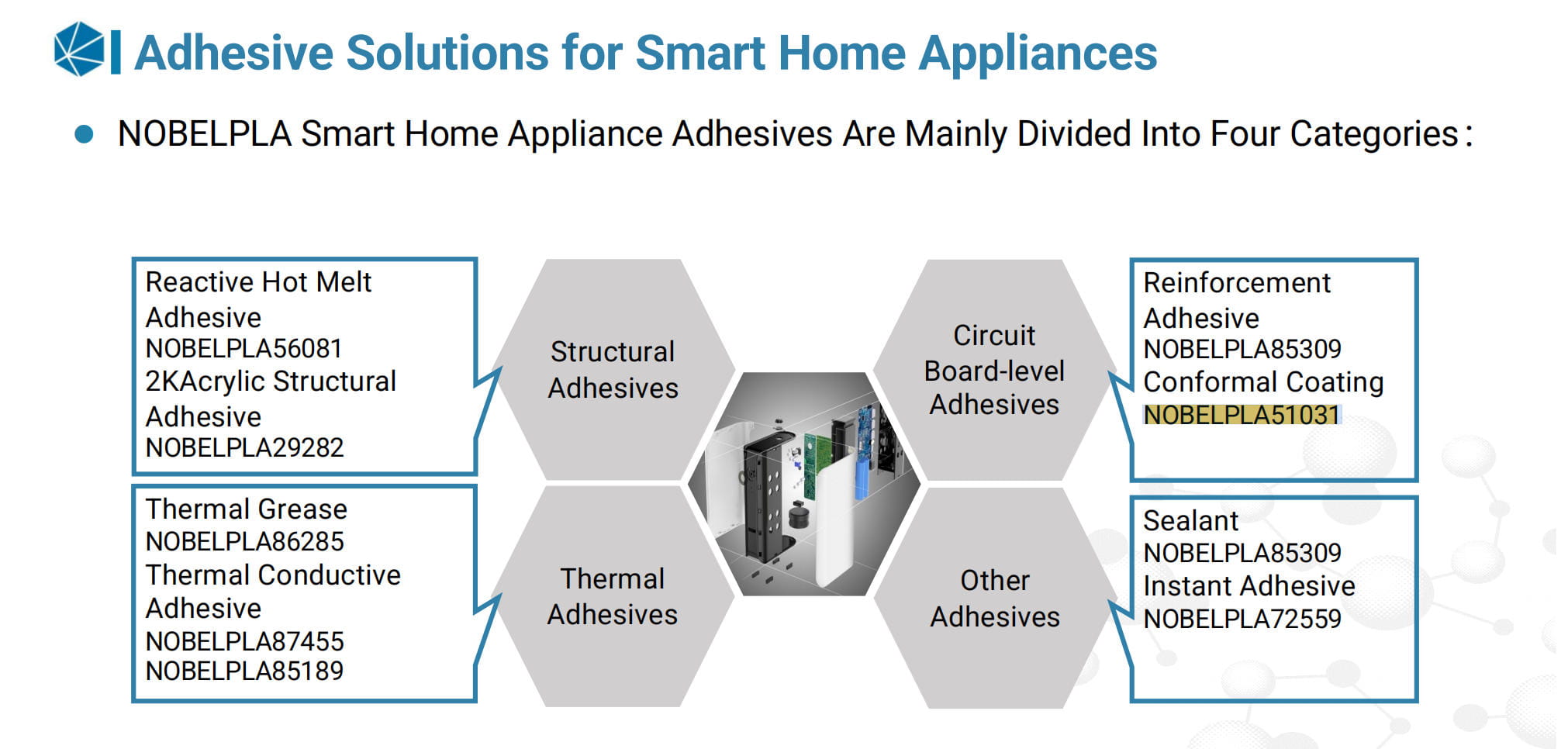
| Target Application | Smart home appliance electronics; bonding and reinforcement of electronic components |
| Chemistry | Epoxy |
| Curing Mechanism | Two-component reactive curing |
| Mixture Ratio | 2:1 (resin : hardener) |
| Color | Black / Light Yellow |
| Viscosity | 41,000 mPa·s |
| Hardness | Shore D 95 |
| Lap Shear Strength | 25 MPa (Al to Al) |
| Primary Functions | Structural Bonding; Component Reinforcement |
| Thixotropy | High thixotropic behavior for precise dispensing and minimal flow |
| Open / Working Time | Long operating time for assembly flexibility |
| Substrate Compatibility | Excellent adhesion to metals, plastics, and other electronic substrates |
| Customization | Formulation customizable to meet specific performance and process requirements |
NOBELPLA51031 is a high-performance, two-component epoxy adhesive designed for bonding and reinforcing electronic components in smart home appliances. The material exhibits high thixotropy, allowing precise application and minimal flow during assembly, while providing long working time to accommodate complex manufacturing processes.
With a Shore D hardness of 95 and lap shear strength of 25 MPa (Al-to-Al), the adhesive delivers excellent structural integrity and mechanical reliability. Its broad substrate compatibility ensures strong adhesion to metals, plastics, and other electronic materials.
The 2:1 resin-to-hardener ratio and high viscosity (41,000 mPa·s) enable controlled dispensing and consistent coverage. Customizable formulations further allow optimization for specific electronic applications, making NOBELPLA51031 a robust and reliable solution for structural bonding in advanced smart home appliance assemblies.
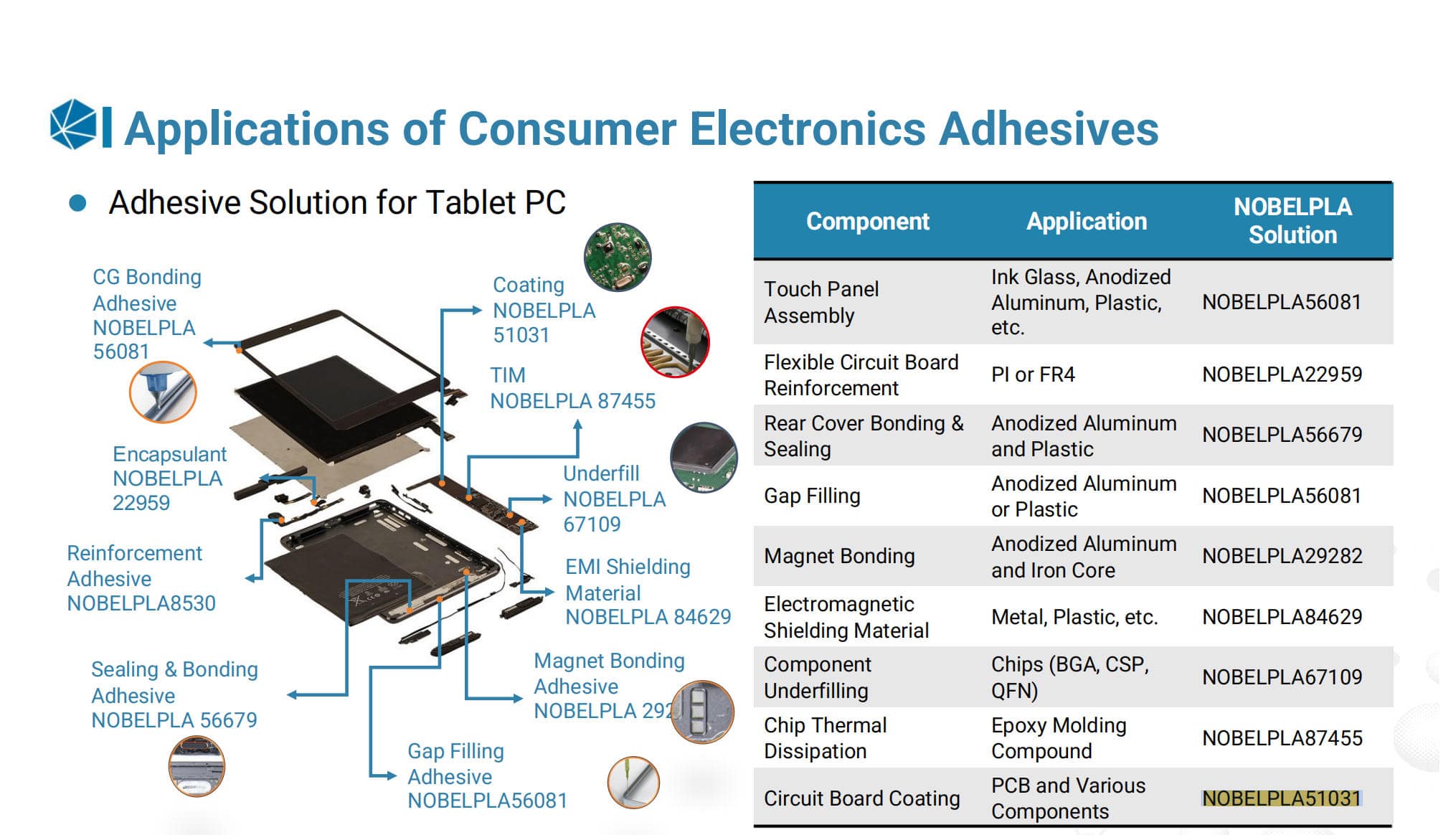
We develop and manufacture thermally conductive interface materials (TIMs), structural bonding adhesives, encapsulation and potting systems, conformal coatings, and electrically conductive adhesives for advanced electronic assemblies.
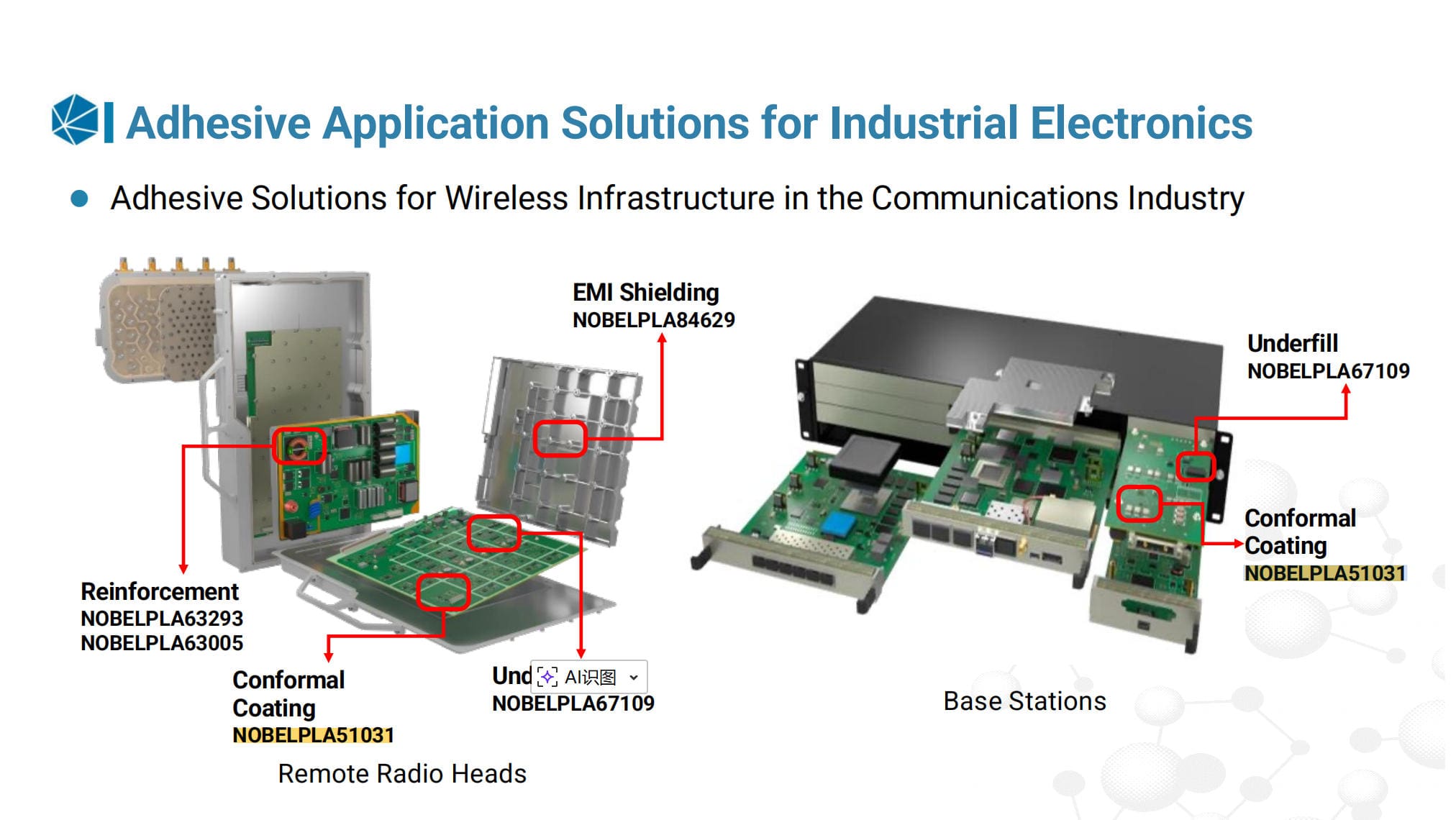
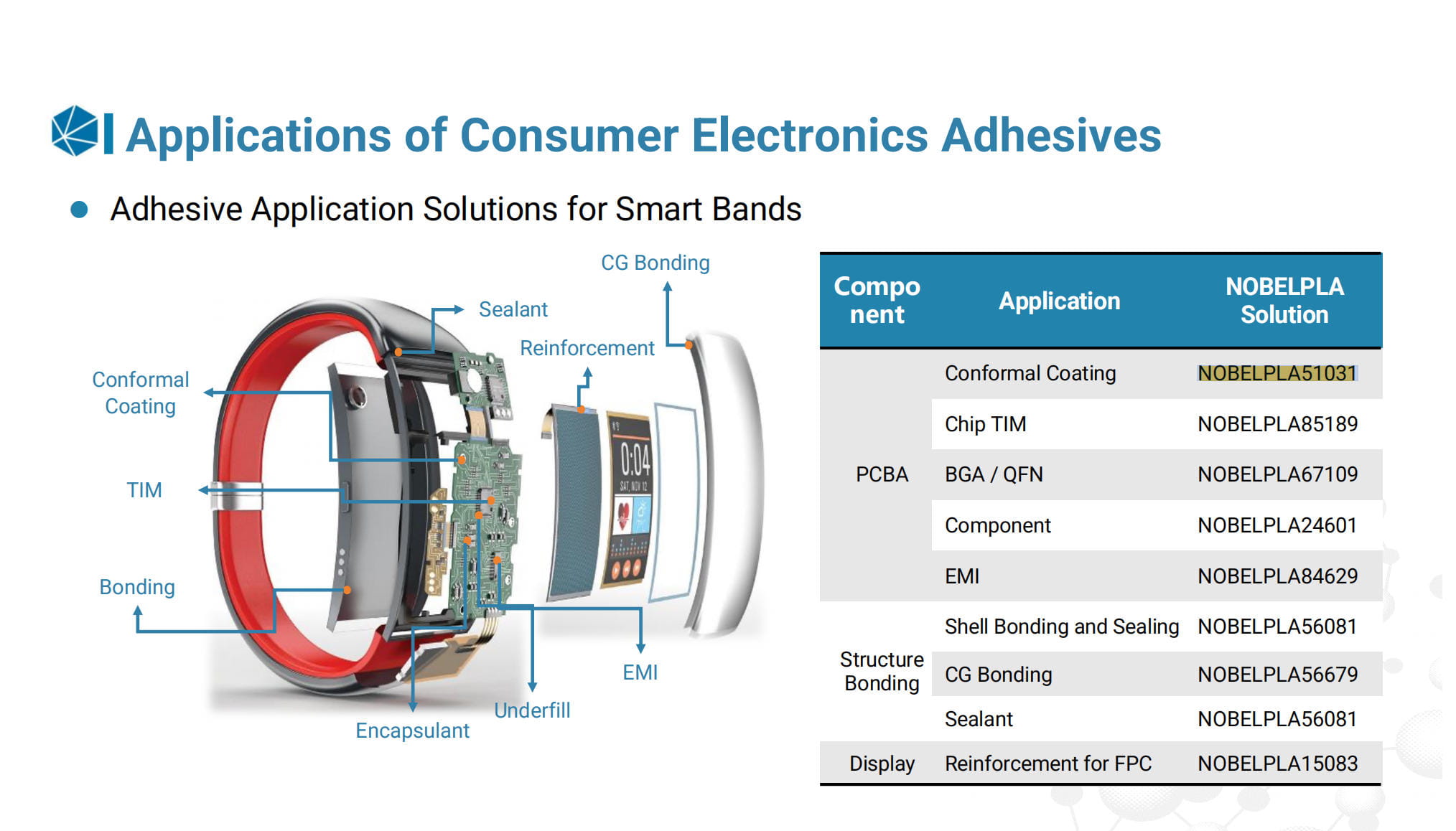
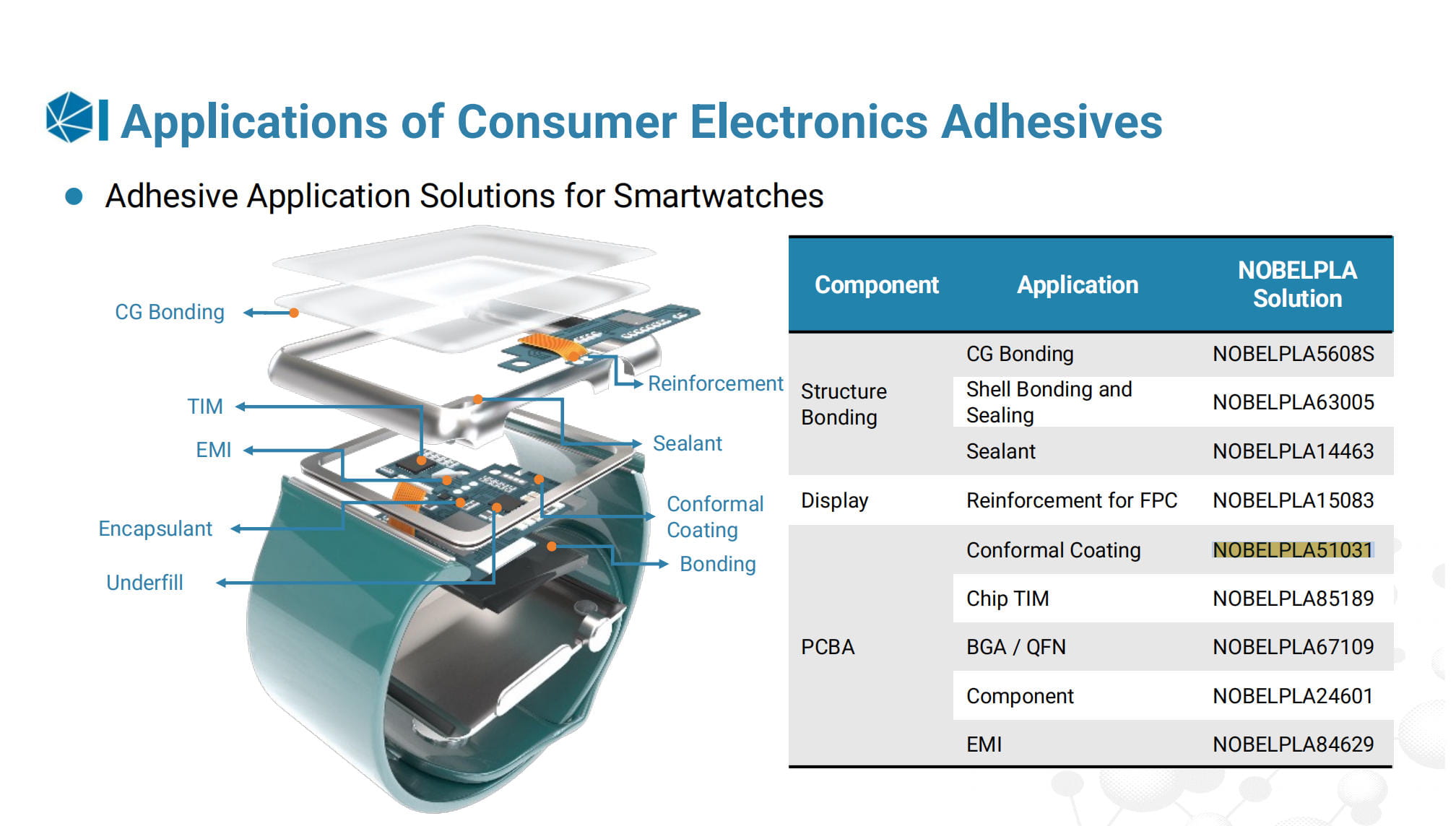
Our materials are widely applied in power electronics modules, automotive ECUs, LED lighting systems, battery management systems (BMS), industrial control units, communication hardware, and electronic packaging solutions.
Our formulations are built on epoxy, silicone (RTV and addition-cure), polyurethane, acrylic, UV-curable, and hybrid polymer platforms engineered for long-term reliability and process stability.
We offer thermal greases, thermal gap fillers, thermal gels, thermally conductive potting compounds, and thermally conductive structural adhesives designed for various thermal architectures.
Through optimized filler morphology, controlled particle packing density, and enhanced wetting behavior, our materials minimize air entrapment and improve surface conformity.
Thermal conductivity performance depends on filler type and loading strategy. Multiple grades are engineered to address different power density and heat flux requirements.
Yes. Most TIM grades provide high dielectric strength, high volume resistivity, and reliable electrical insulation for power devices.
Yes. Silver-filled conductive systems are available for grounding, EMI shielding, and selective electrical interconnection.
We offer heat-curing, room-temperature curing (RTV), moisture-curing, UV-curing, and dual-cure systems compatible with diverse manufacturing processes.
Yes. Rheological properties are optimized for needle dispensing, jetting, screen printing, and robotic inline production.
Surface-treated fillers and anti-settling technologies are used to ensure viscosity consistency and extended shelf life.
Yes. Flexible silicone and hybrid elastomer systems help absorb stress caused by CTE mismatch and thermal cycling.
Proper control of the Coefficient of Thermal Expansion (CTE) reduces thermo-mechanical fatigue, preventing cracking, delamination, and long-term reliability failures.
Selected grades are engineered to maintain adhesion strength, dielectric performance, and mechanical integrity under repeated temperature fluctuations.
We provide epoxy and silicone encapsulants designed to protect components from moisture ingress, vibration, dust contamination, and chemical exposure.
Yes. Certain formulations are designed to meet flame-retardancy requirements for safety-critical electronic systems.
Yes. Our conformal coatings provide environmental protection against humidity, corrosion, ionic contamination, and surface leakage.
Thermal conductivity, dielectric strength, dielectric constant, volume resistivity, glass transition temperature (Tg), CTE, modulus, adhesion strength, rheology profile, and long-term aging stability.
Strict raw material qualification, controlled manufacturing processes, and comprehensive quality management systems ensure full lot traceability and reproducibility.
Yes. Our products comply with major international standards including RoHS and REACH.
Yes. We provide application-driven customization to optimize thermal conductivity, flexibility, curing speed, adhesion performance, and process compatibility.
Yes. We assist customers with sample evaluation, pilot production trials, and qualification programs.
Yes. Our products are engineered to withstand vibration, humidity, and harsh temperature environments typical of automotive electronics.
Depending on chemistry selection, materials are designed to perform reliably across wide operational temperature conditions.
Low moisture absorption polymer networks and controlled crosslink density help maintain dielectric and mechanical stability under high humidity.
Yes. Select formulations are developed to minimize ionic contamination and volatile emissions in sensitive electronic assemblies.
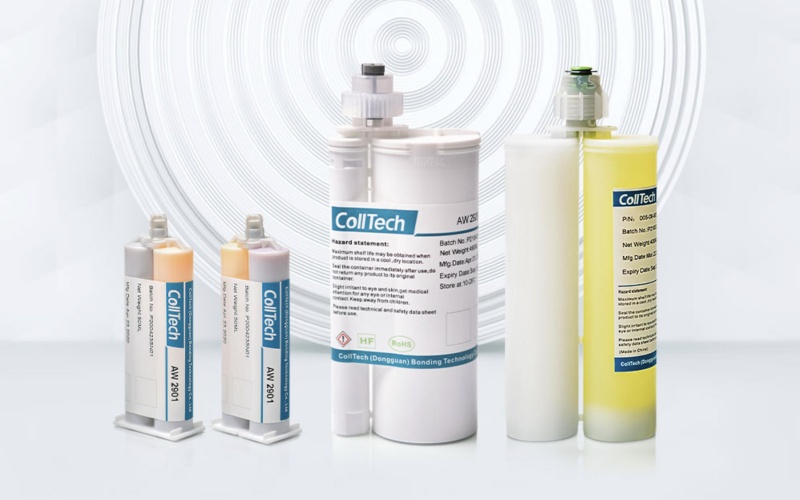
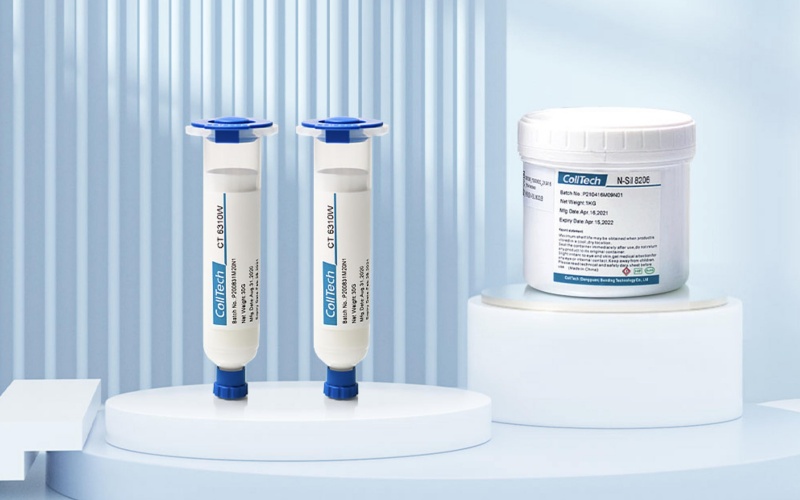
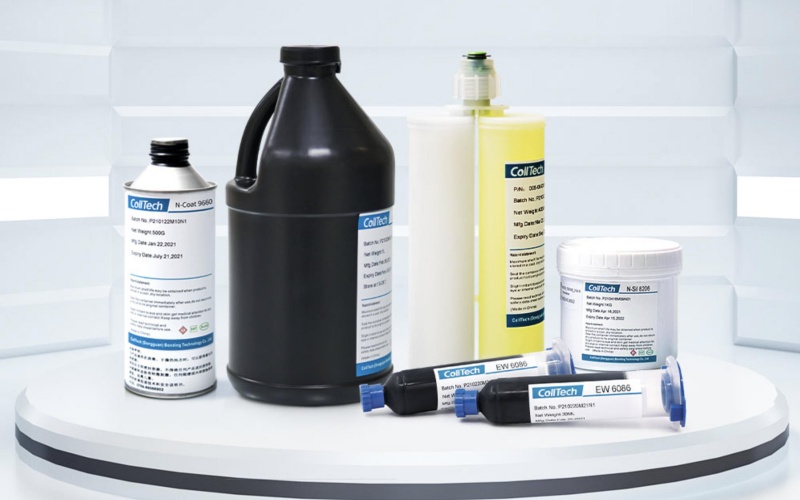
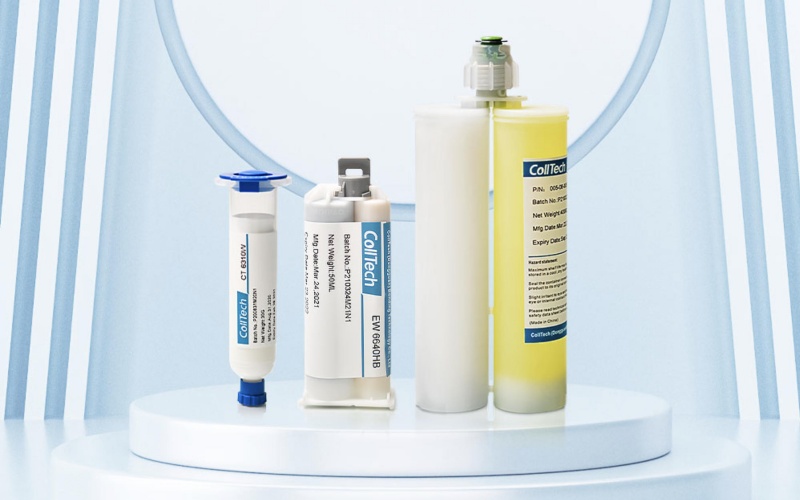
Products are supplied in syringes, cartridges, dual cartridges, pails, and drums to support both R&D and mass production.
Shelf life is validated through accelerated aging testing and defined in each Technical Data Sheet under recommended storage conditions.
We provide Technical Data Sheets (TDS), Safety Data Sheets (SDS), and application guidelines upon request.
Customers may contact our sales and engineering teams through our official website to request samples, quotations, and technical consultation.
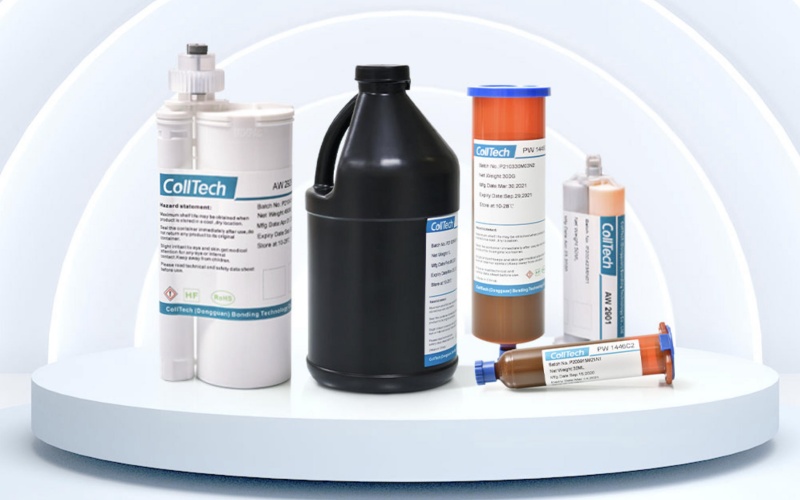
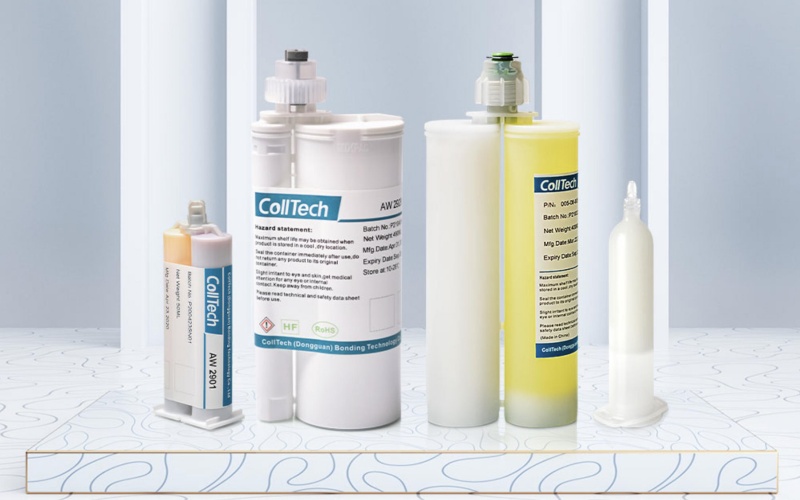
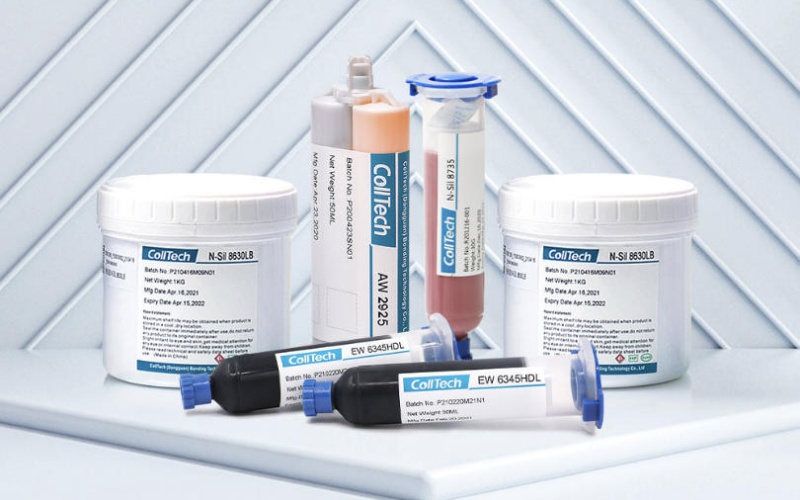
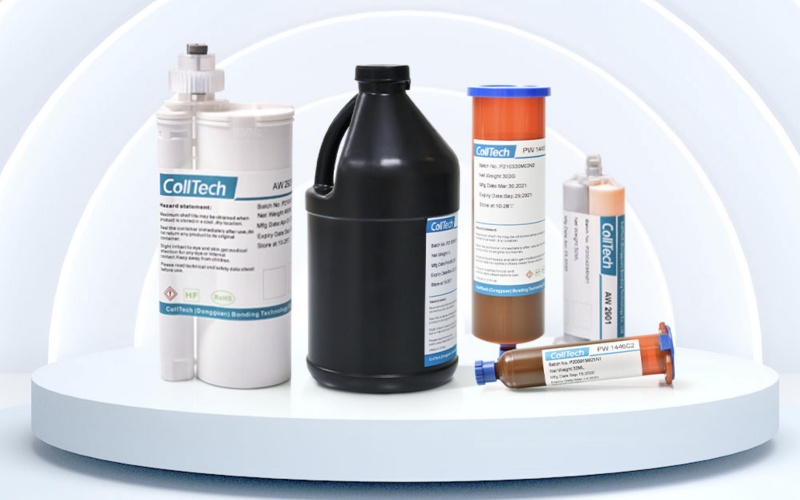
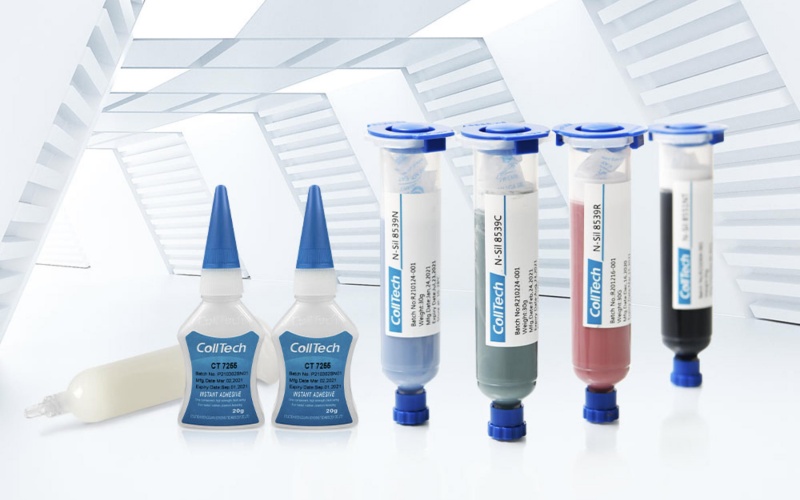
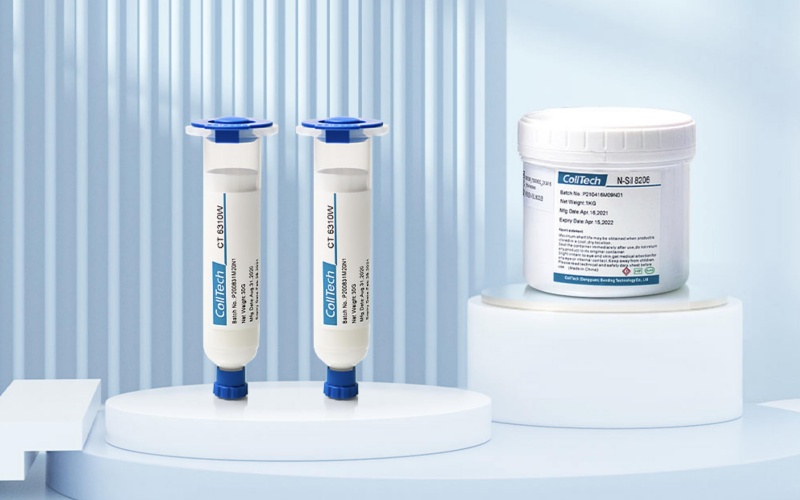
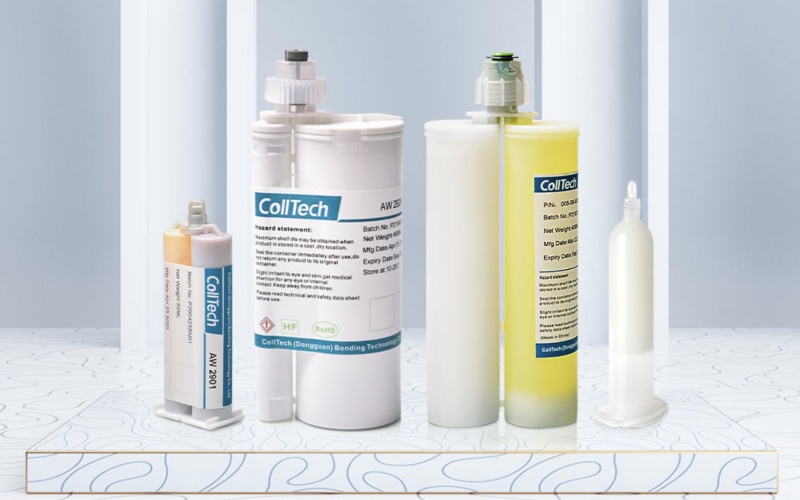
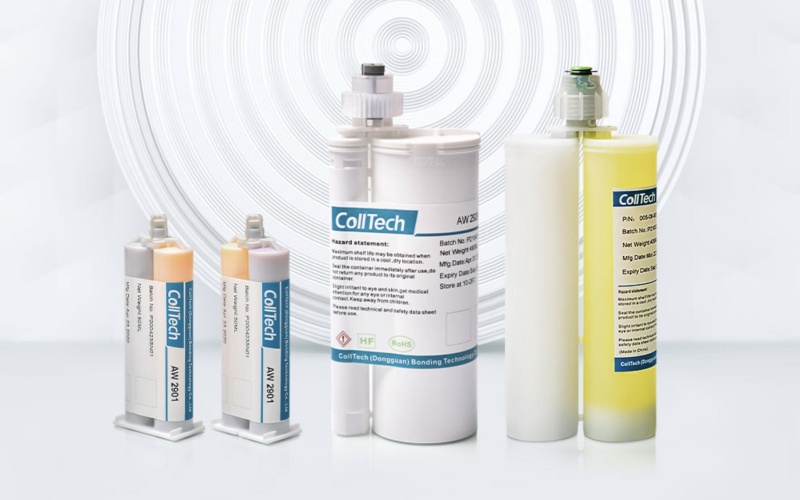
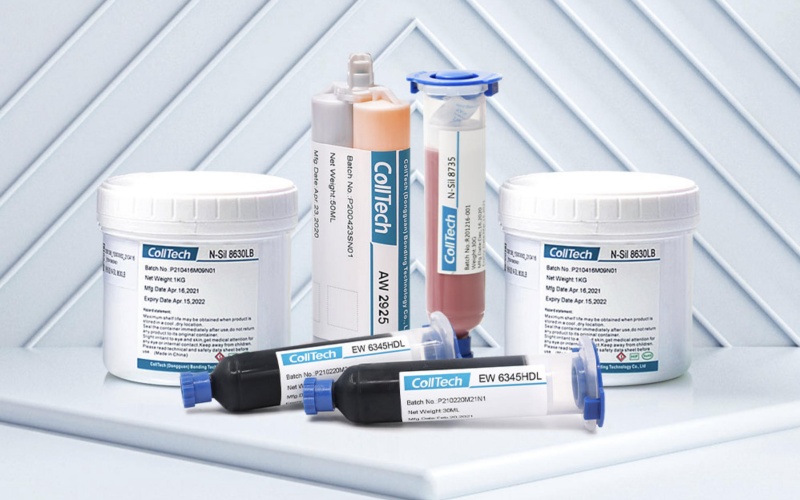

One-stop Electronic Adhesive solution provider.

Support email contact.

Professional technical guidance.

Support email contact.
leave a message
Scan to wechat :

Scan to Whatsapp :

 Product categories